
Agriculture
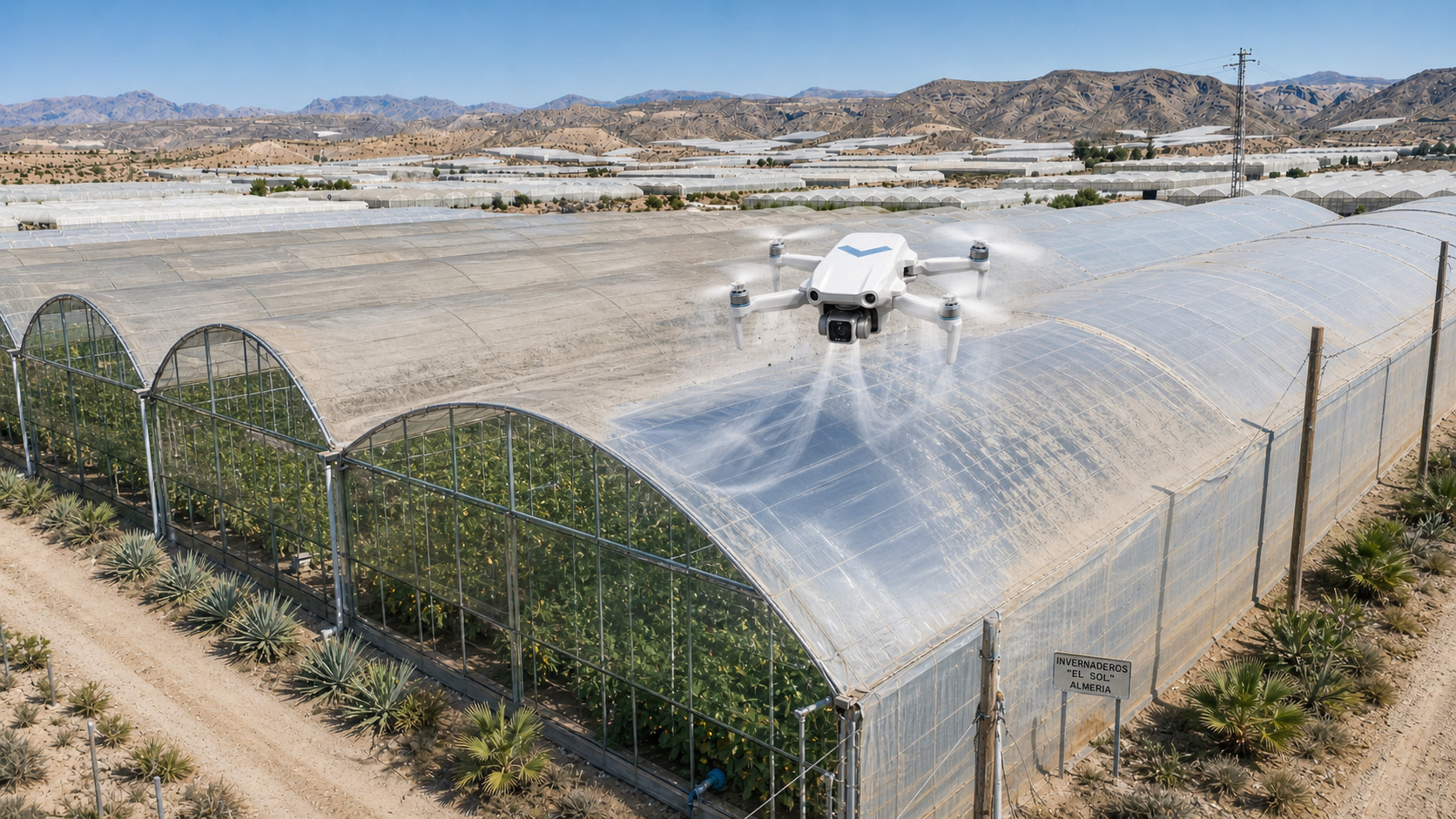
Greenhouse surfaces — glass panels, tinted glazing, and plastic film coverings — are functionally dependent on light transmission. Dust accumulation interferes directly with photosynthesis, disrupts controlled temperature environments, and accelerates surface material degradation.
In high-dust regions, the effect is compounded: even brief dust events can measurably reduce light transmission and affect crop performance if surfaces are not cleaned promptly. AIr™ provides a patented airflow cleaning method for agricultural surface maintenance that operates without water, without contact, and without ground access.
Drone Greenhouse Cleaning
Traditional greenhouse cleaning approaches face a set of constraints that are particularly acute in the markets where clean surfaces matter most: Access to large greenhouse rooftop surfaces typically requires elevated platforms or manual crews, increasing both cost and safety exposure.
- Water-intensive cleaning is logistically costly and increasingly restricted in water-scarce growing regions.
- Manual or brush-based methods risk scratching or tearing plastic film coverings, accelerating degradation and increasing replacement frequency.
- Damaged plastic films — particularly when abraded — shed microplastic particulates that enter soil and water systems, creating both environmental and regulatory risk.
Surface-Specific Advantages
Greenhouse coverings vary in material and function. The AIr™ method adapts to each:
Frosted and Diffusion Glass
Diffusion glass distributes light to prevent hotspots. Dust accumulation disrupts the diffusion function. Non-contact airflow cleaning restores the surface without risking the coating integrity that defines its performance.
Tinted and Spectrum-Selective Glass
Tinted glazing manipulates the light spectrum to optimize specific growth conditions. Dust layers sitting over tinted surfaces alter the transmitted spectrum unpredictably. Regular airflow cleaning maintains the spectral consistency the surface was designed to deliver.
Plastic Film Coverings
Plastic films are the dominant covering material for large-scale greenhouse operations worldwide. They are particularly vulnerable to abrasion from mechanical cleaning, and degraded films that shed microplastic fragments pose disposal and environmental challenges. Airflow-based cleaning extends film lifespan and reduces replacement frequency without introducing contact risk.
Target Markets
Almeria, Spain — the largest greenhouse concentration in Europe — experiences frequent Saharan dust events that reduce light availability inside greenhouse structures within hours. The combination of high cleaning frequency requirements, water scarcity, and the economic scale of the Almeria growing region makes it a primary target environment for AIr™ deployment.
Additional target markets include:
Agrivoltaic installations:
dual-use solar and agricultural land where ground vehicle access is restricted to prevent crop damage.
MENA greenhouse operations:
where dust event frequency and water scarcity make conventional cleaning methods operationally and economically unsustainable.
Controlled environment agriculture (CEA):
high-value indoor growing facilities where surface cleanliness directly impacts yield quality and certification compliance.
Environmental Case
Extending plastic film lifespan through non-contact cleaning reduces both material consumption and the environmental cost of premature disposal. Preventing surface abrasion that produces microplastic particulates reduces contamination risk for adjacent soil and water systems. Zero water consumption removes agricultural cleaning from competition with irrigation demand.

Frost Prevention in Orchards
The AIr™ airflow method can also help in orchard frost prevention, particularly for high-value fruit crops exposed to radiative frost events. During calm, clear nights, cold air settles near the ground and around blossom or fruiting zones, creating localized frost pockets that can damage flowers, young fruit, and emerging buds.
Controlled drone airflow can disturb this stagnant boundary layer, promote localized air mixing, and reduce frost formation risk without water application, chemical treatment, or fixed tower infrastructure. This use case is most relevant for selective, targeted protection of high-value orchard zones, early-bloom areas, frost-prone depressions, and trial plots, rather than broad-acre frost mitigation.
As with snow removal, the commercial value depends on timely deployment and environmental thresholds: the method is best suited to marginal frost events where air mixing can make the difference between surface freezing and crop survival, not severe advective freezes where ambient air temperatures are uniformly below damaging thresholds.