
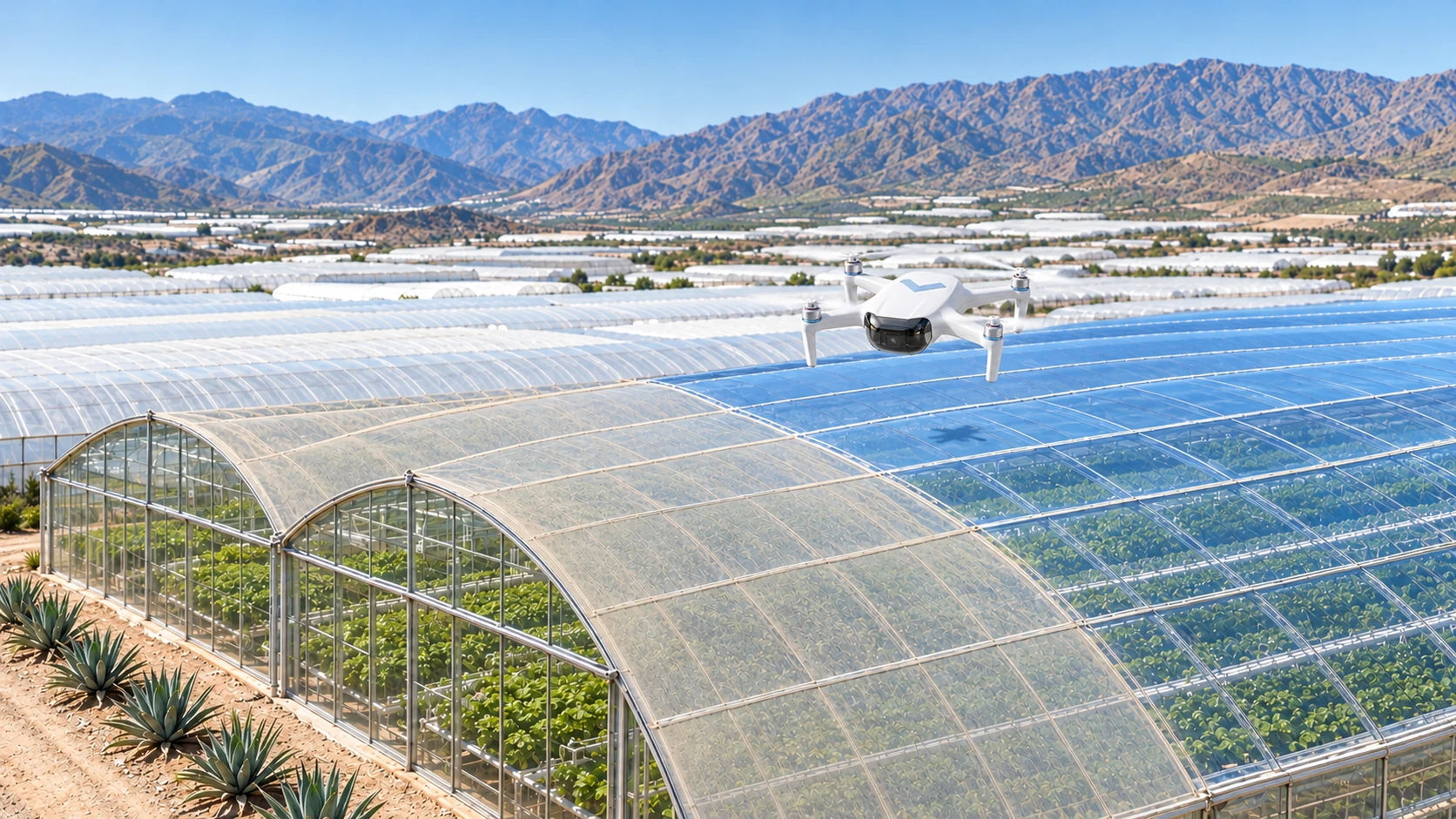
Drone Greenhouse Cleaning
Greenhouse surfaces, including glass panels, tinted glazing, and plastic film coverings, are functionally dependent on light transmission. Dust accumulation interferes directly with photosynthesis, disrupts controlled temperature environments, and accelerates surface material degradation.
In high-dust regions, the effect is compounded: even brief dust events can measurably reduce light transmission and affect crop performance if surfaces are not cleaned promptly. AIr™ provides drone greenhouse cleaning through a patented airflow cleaning method that operates without water, without contact, and without ground access.
Cleaning Drones in Agriculture
Access to large greenhouse rooftop surfaces typically requires elevated platforms or manual crews, increasing both cost and safety exposure. Traditional greenhouse cleaning approaches face a set of constraints that are particularly acute in the markets where clean surfaces matter most:
- Water-intensive cleaning is logistically costly and increasingly restricted in water-scarce growing regions.
- Manual or brush-based methods risk scratching or tearing plastic film coverings, accelerating degradation and increasing replacement frequency.
- Damaged plastic films, particularly when abraded, shed microplastic particulates that enter soil and water systems, creating both environmental and regulatory risk.
- Nozzle-based agricultural spray drones rely on 600–800 litres per hectare of water and chemical cleaning agents (typically used for seasonal whitewash removal), making them water-intensive for routine dust events and leaving wet roofs that trap airborne sand.
For pre-coating surface preparation before spray drones apply seasonal shading compounds or whitewash, AIr™ can clear loose dust and morning condensation so coatings bond evenly to a dry roof.
Surface-Specific Advantages
Greenhouse coverings vary in material and function. The patented AIr™ method adapts to each:
Diffuse and Anti-Reflective Glass
Diffuse glass distributes light to prevent hotspots. Dust accumulation disrupts the diffusion function. Non-contact airflow cleaning removes loose dust without brush contact with the coatings that define the glass’s performance.
Tinted and Spectrum-Selective Glass
Tinted and spectrum-selective glazing is designed to manage the light reaching crops for specific growing conditions. Dust accumulation reduces transmitted light and can compromise the intended optical performance. Regular non-contact airflow cleaning helps maintain the light environment the surface was designed to deliver.
ETFE Membranes & Plastic Film Coverings
Polyethylene (PE) polytunnel films and tensioned ETFE (ethylene tetrafluoroethylene) cushions are the dominant lightweight coverings in commercial horticulture and controlled-environment domes, where heavy rail-mounted roof crawlers cannot operate. Beyond tangential wall-jet shear, pulsed rotor downwash can induce controlled elastic membrane flutter, gently flexing tensioned films to break the static bond of dry dust crusts or bridging snow without mechanical brush abrasion or microplastic shedding.
Target Markets
Almería, Spain, the largest greenhouse concentration in Europe, experiences frequent Saharan dust events that reduce light availability inside greenhouse structures within hours. The combination of high cleaning frequency requirements, water scarcity, and the economic scale of the growing region makes it a primary target environment for drone greenhouse cleaning deployment.
Agrivoltaic installations:
dual-use solar and agricultural land where ground vehicle access is restricted to prevent crop damage.
MENA greenhouse operations:
where dust event frequency and water scarcity make conventional cleaning methods operationally and economically unsustainable.
Controlled environment agriculture (CEA):
sunlit, high-value greenhouse facilities where clean glazing helps maintain light delivery and crop quality.
Environmental Case
Extending plastic film lifespan through non-contact cleaning reduces both material consumption and the environmental cost of premature disposal. Preventing surface abrasion that produces microplastic particulates reduces contamination risk for adjacent soil and water systems. Zero water consumption removes agricultural cleaning from competition with irrigation demand.
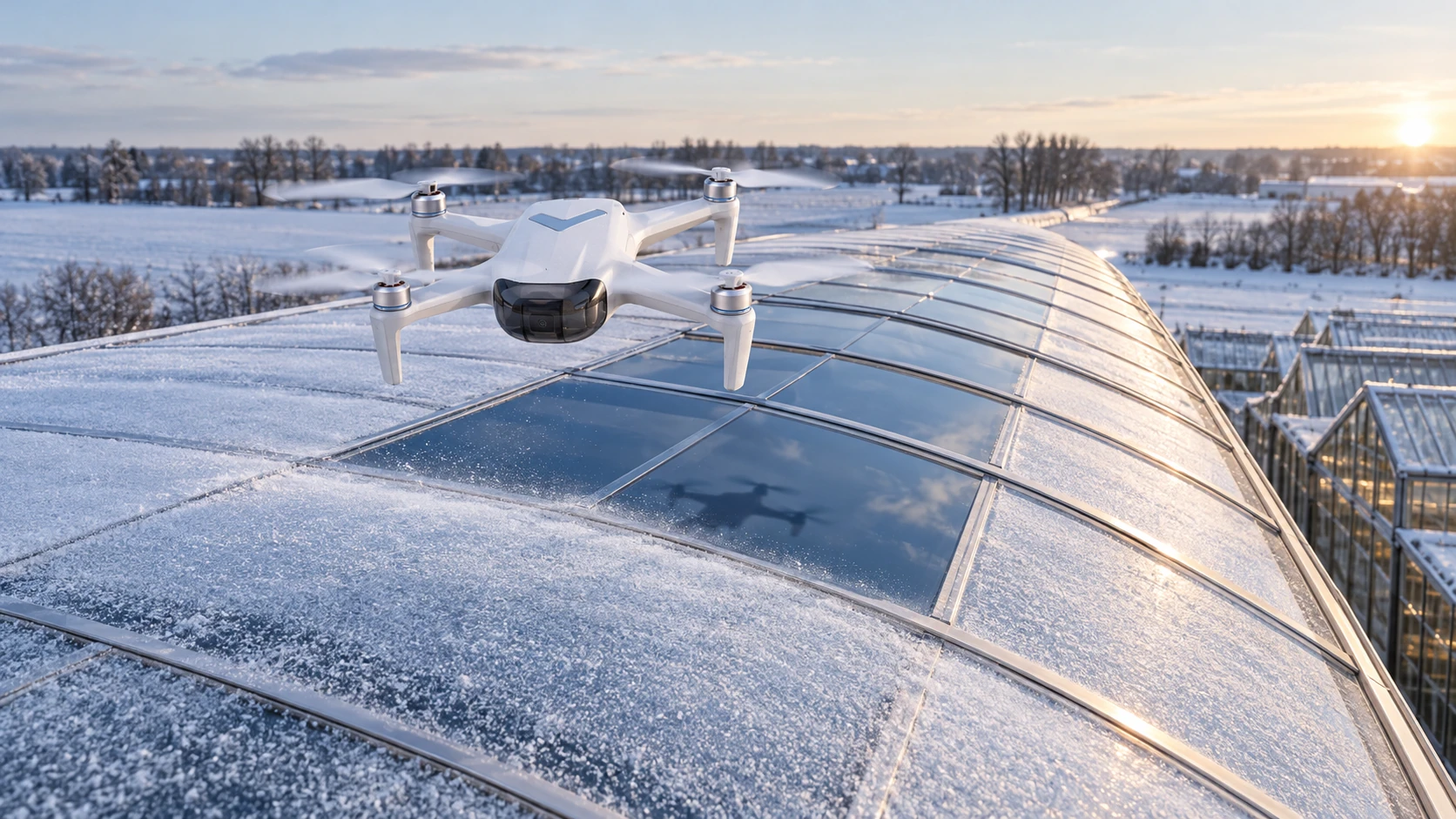
Drone Snow and Canopy Clearance
Beyond dust removal, the AIr™ airflow method applies directly to seasonal snow and debris clearance on both structural coverings and high-value crops.
Heavy, wet snowfall presents an acute structural threat to commercial greenhouse operations. Accumulation over roof arches and plastic films creates extreme mechanical loading that can lead to frame buckling and covering failure. Traditional manual clearance is slow, labour-intensive, and hazardous on elevated, slippery structures.
Controlled downwash from agricultural drones can mobilise and shed fresh, uncompacted snow from suitable greenhouse roofs without physical scrapers, hot-water washing, or personnel accessing the roof.
Orchard Canopy Protection
In high-value cherry orchards, soft-fruit canopies, and vineyards, standing rainwater after a summer shower causes osmotic skin splitting (fruit cracking) and fungal rot, while sudden spring sleet or snow can fracture branches and freeze blossoms. Traditionally, growers charter manned helicopters to hover low over orchards to blow water off cherries or mix warm inversion air during frosts, an expensive and high-risk operation. Sensor-guided drone downwash provides targeted, low-altitude canopy clearing:
- Rainwater shedding
blows trapped water droplets out of cherry stem bowls and fruit clusters immediately after rain to prevent osmotic cracking.
- Fresh snow & sleet removal
dislodges uncompacted snow before freeze-thaw cycles lock it onto branches or greenhouse arches.
- Non-contact canopy agitation
clears moisture and supports airflow-assisted pollination without chemical desiccants or mechanical shakers.
Commercial value depends on rapid deployment before thermal freeze-thaw cycles cause compaction. The method is designed for targeted, timely intervention on high-value varieties and vulnerable orchard plots.