
Drone Facade Cleaning
Maintaining built infrastructure in arid and high-particulate environments creates a persistent operational challenge: dust accumulates rapidly on glass facades, skylights, and LED displays, while water scarcity and access constraints limit conventional methods.
While tethered wash drones use purified water to clean heavy grime, deploying hoses and water rigs for routine dust is resource-intensive. Leaving facades wet to air-dry in dusty climates also attracts airborne particles before the water can evaporate.
AIr™ provides patented, non-contact airflow technology that operates both as a standalone waterless cleaner for dry dust removal and as an aerial drying pass that clears residual water left by spray drones.
Surface Applications
The AIr™ method is applicable across the principal surface categories that define built environment maintenance:
Glass Facades & Building Exteriors
Post-storm dust removal from external glazing restores daylight transmission, visual clarity, and building appearance without water runoff or chemical residue. Using dry airflow for routine maintenance significantly reduces how often heavy, hose-fed wash drones need to be deployed.
When wet washing is required using osmosis-filtered water, AIr™ acts as a high-speed finishing pass, clearing standing water from panes, ledges, and frames immediately rather than waiting for slow evaporation in dusty conditions.
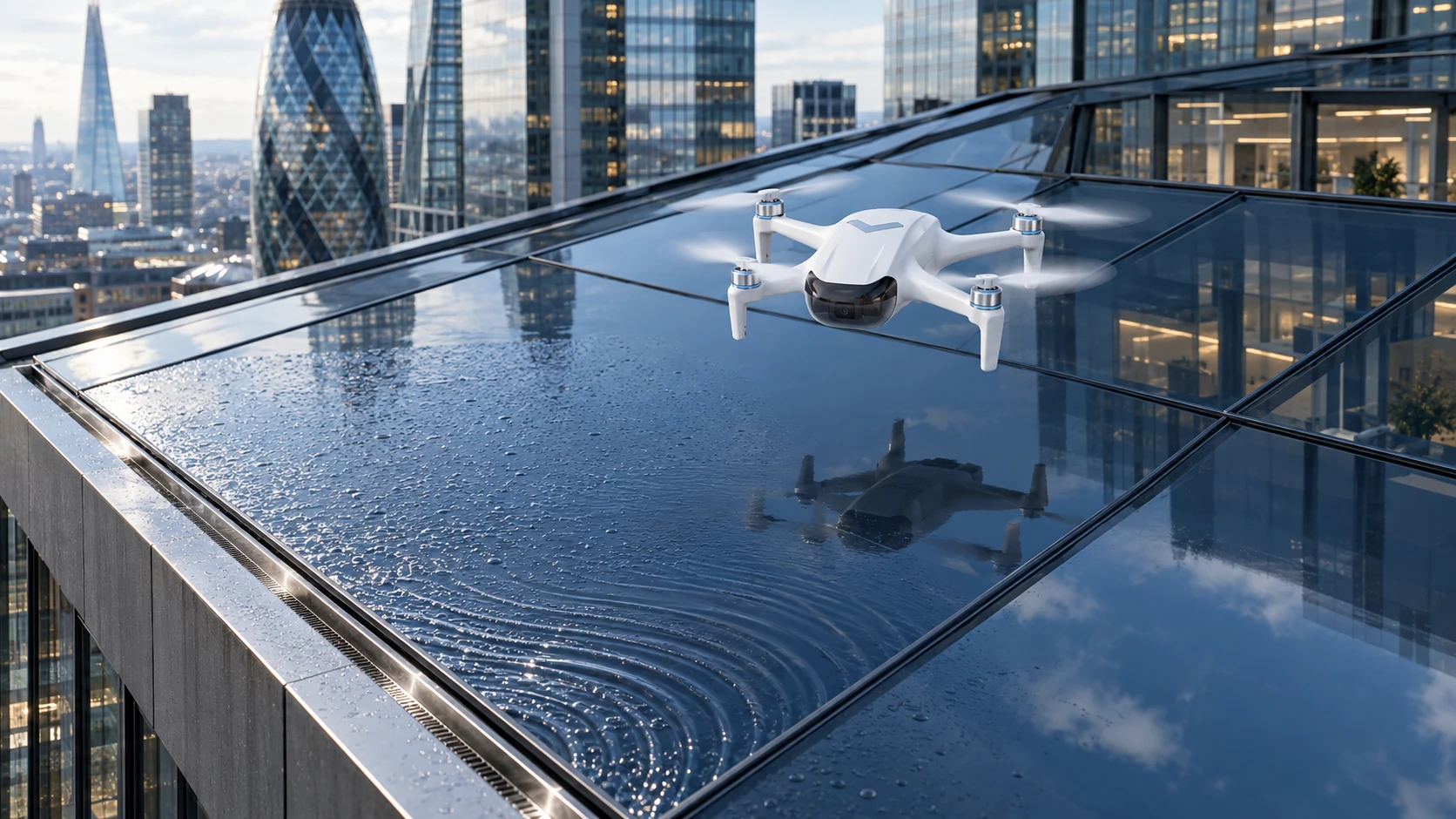
Rooftops & Skylights
Accumulated dust on rooftop glazing and skylights reduces indoor daylight quality. Drone-based airflow cleaning can reduce the need for personnel to work at height and the logistical cost of elevated access platforms.
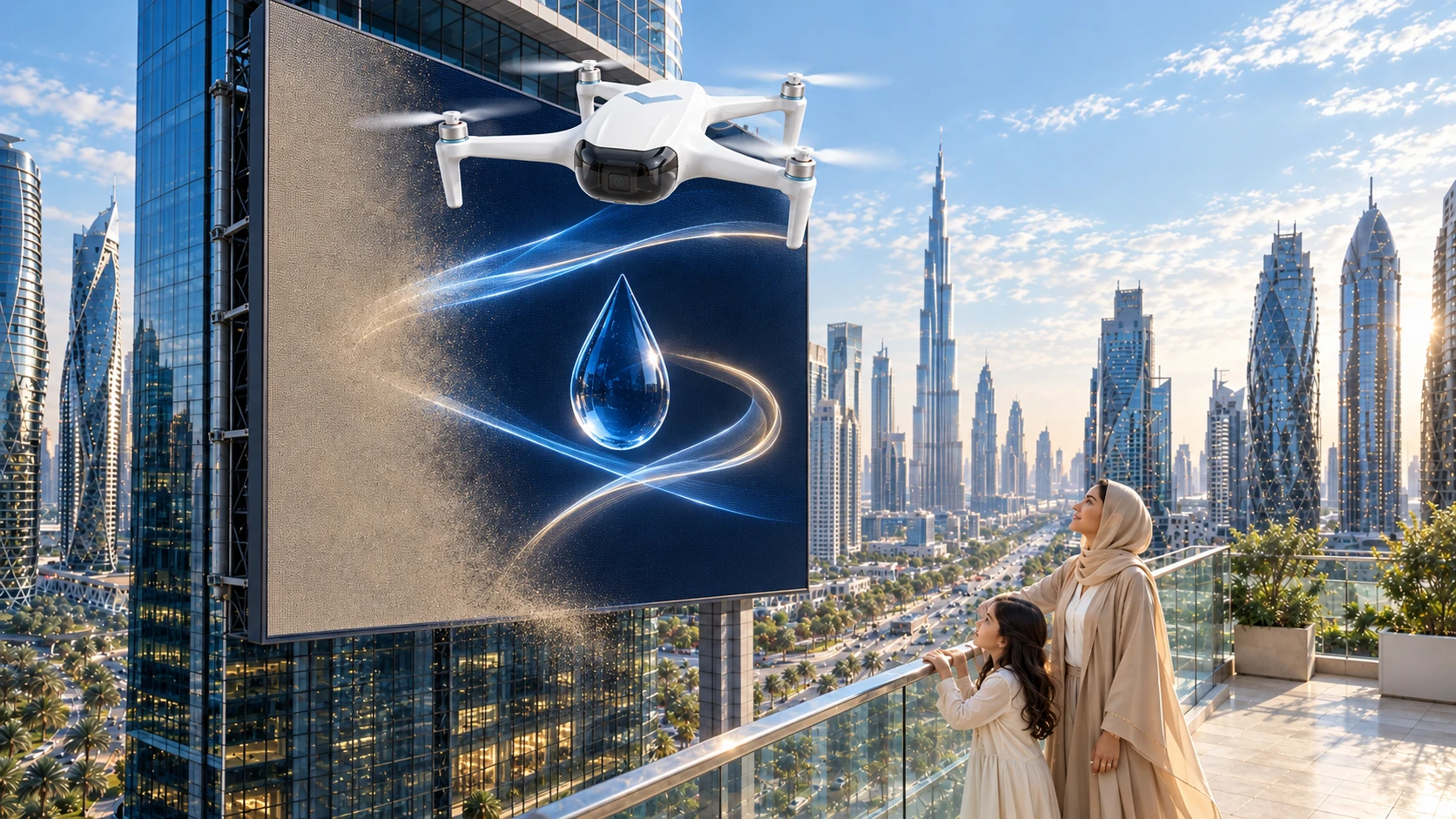
LED Billboards & Digital Signage
Outdoor LED surfaces in high-particulate environments can lose brightness and visibility as dust accumulates on the surface. Regular airflow cleaning maintains brightness and visibility without risking moisture ingress or making physical contact.
Bridges, Communication Towers & Critical Infrastructure
Sensor housings, communication towers, weather stations, bridge-mounted instrumentation, and other elevated assets require periodic removal of loose dust, debris, moisture, or snow to preserve visibility, access, and functional reliability. Drone-based airflow cleaning can reduce the need for difficult manual access on suitable assets.
Emerging Urban Applications
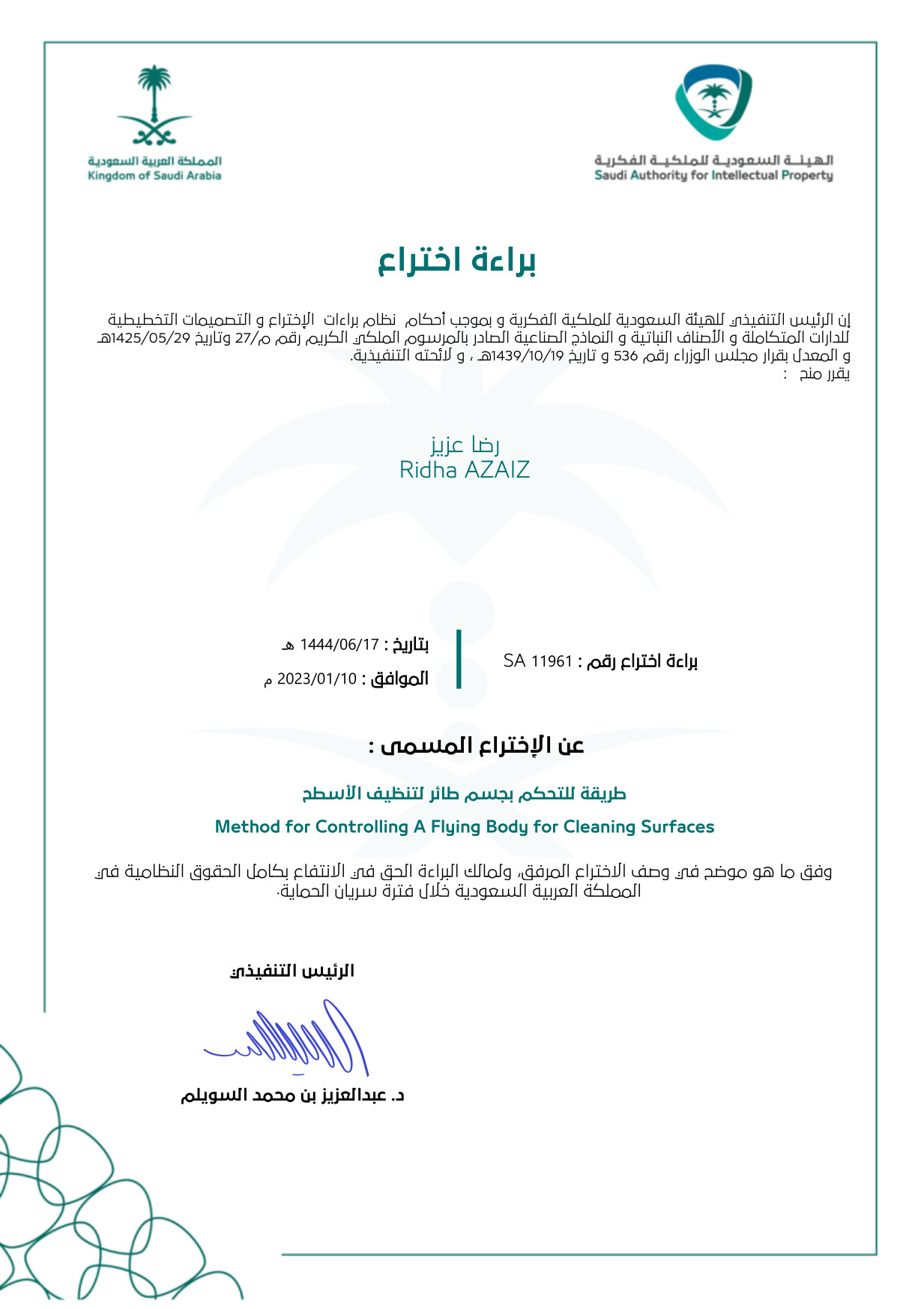
Large-scale urban development programmes in the Gulf and wider MENA region, including projects designed around renewable energy integration and low-maintenance building systems, represent a natural market for AIr™ deployment. The Saudi Arabia patent (SA11961) provides active IP protection in one of the highest-growth markets for both solar and smart infrastructure maintenance.
Operational Advantages in Built Environments
- Waterless dry cleaning:
removes loose sand and particulate buildup without water handling, ground pump skids, or wash-water runoff on suitable maintenance tasks. - Active surface drying:
clears standing water and moisture films after wet drone washing or rain events, eliminating evaporative drying time in high-dust environments. - Reduced rope access and platforms:
enables remote work on suitable surfaces, reducing reliance on personnel working at height. - Non-contact surface preservation:
avoids mechanical brush contact and water application on sensitive glass, coatings, and screens. - Autonomous alignment:
supports repeatable positioning and maintenance paths for qualified surfaces. - Scalable deployment:
compatible with compact and enterprise multirotor platforms, enabling tailored mission profiles in structured urban environments under local airspace frameworks.